
The Veeps who Served
A Veterans Day Post

It’s Veterans Day, a day to be grateful for those who gave their time and risked their lives to serve our country. Sometimes we sent them on missions that were unwise or unjust—that’s on us—not the veterans.
Since this is a forum of Veepology, I thought it would be interesting and timely to take a look at vice presidents who have served our country in uniform. Back in January 2020 (the last month of the before times) Naval Academy Professor Claude Berube wrote an article for War on the Rocks looking at the military service of U.S. presidents. He has some great tables that show the patterns of service of our presidents and vice presidents. Check them out and read the article.
Professor Berube is interested in civil-military relations, an important topic. As a Veepologist, I’m particularly interested in how the patterns of Presidential and vice presidential service compare.
If you look at Berube’s table with Presidents and VPs, what jumps out is that from the beginning of our nation most presidents have served in some capacity and most vice presidents have not. I haven’t done the calculations, but even excluding the VPs who didn’t serve, overall, the future presidents had higher ranks on average than the future vice presidents.1

There are several factors here, a high-ranking general and war hero is more likely to serve at the top of a ticket than as running mate (Washington, Jackson, Harrison, Grant, Eisenhower.)2 In the 19th century military commissions were closely linked to political connections. Capable politicians who proved adept either on the battlefield or in organizing militias rose quickly, which also enhanced their political standing. This created a virtuous cycle in which the most capable politically connected officers were promoted, which in turn enhanced their future political prospects.
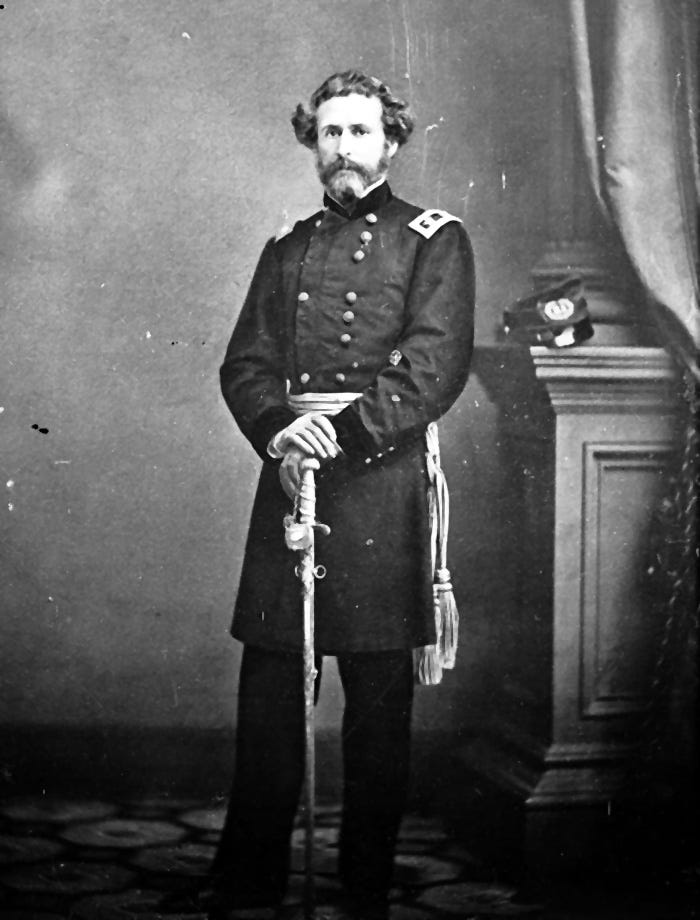
The Mexican-American and particularly the Civil War generated numerous “political generals” who rose to the presidency, including Franklin Pierce, James Garfield, Chester Alan Arthur, Benjamin Harrison, and Rutherford B. Hayes. The only vice president who was a “political general” was Arthur, who proved a capable logistician. He never saw battle but was invaluable organizing New York state units. Arthur was the exception. During the second half of the 19th century the presidency was dominated by Civil War veterans, but not the vice presidency. Some of this is contingent, John Logan, a Civil War hero, was the Republican vice presidential nominee in 1884, but that ticket lost the election.
Unlike the Civil War, World War I did not create a generation of veteran presidents. In fact the same number of presidents and vice presidents were veterans of the Great War. Harry Truman had been a battery commander in the Great War (and continued his military career for decades after, retiring as a Colonel.) He was appointed VP and became president on FDR’s death. President Eisenhower became a national hero for his World War II service, but he had also served in World War I.
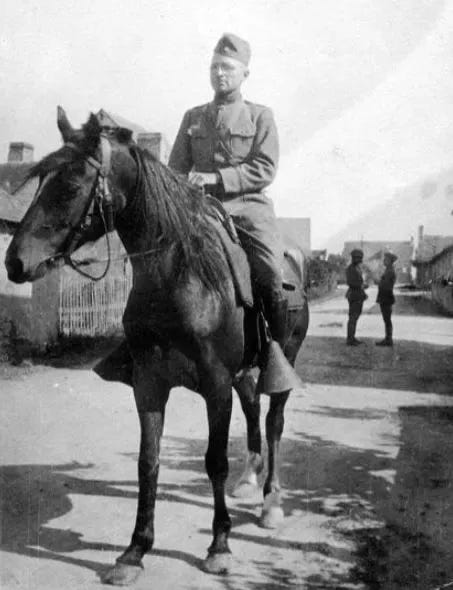
The other World War I vet is my favorite, the enormously capable Charles Dawes—my favorite Veep. A successful businessman and distinguished public servant, when the U.S. entered World War I, Dawes joined up at the age of 52. He was commissioned as a Major and quickly rose in the ranks, retiring as a Brigadier General. He was an organizational genius and was invaluable to General Pershing. A few years later, when testifying to Congress about war expenditures Dawes shouted:
Hell and Maria, we weren’t trying to keep a set of books over there, we were trying to win the war!
This exclamation, which Dawes always claimed was “Helen Maria” made Dawes a celebrity and helped propel him to the vice presidency.
After World War II, we saw a period in which both Presidents and VPs were likely to serve. The biggest exceptions were Hubert Humphrey, who tried to join many times during World War II and was rejected,3 and Nelson Rockefeller, who was working to counter Nazi influence in Latin America during the war.
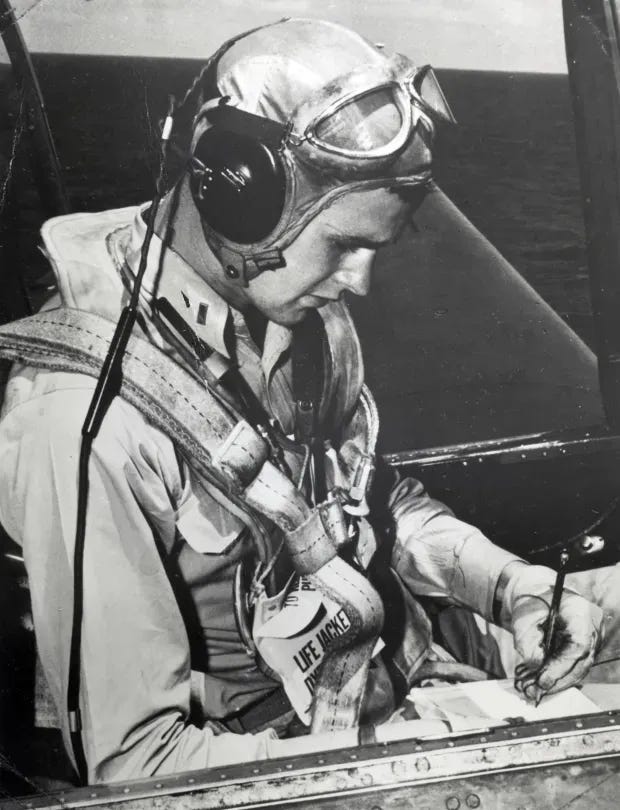
As Berube points out, the nature of presidential and vice presidential service changed in the period after World War II. Instead of generals, presidents and vice presidents were more likely to be junior officers in the Navy (Johnson, Nixon, and Bush Sr.) Several vice presidents were enlisted men in the Army or National Guard (Agnew, Mondale, Quayle, and Gore.)
The Vietnam era did not produce many veteran presidents or vice presidents. Only Al Gore actually went to Vietnam. As a Senator’s son, he was kept out of harm’s way, but we are only looking at the binary here—he served and he didn’t have to. On Veterans Day (or any day really) we aren’t going to judge anyone’s service. Gore was probably the last vice president picked in part because he had served, which was particularly important to balance out Clinton’s evasion of service during Vietnam.
From 1952 till 1988 nearly every presidential election featured all veteran tickets for both parties. The exceptions were 1968 when Humphrey headed the Democratic ticket (the other three politicians on the national tickets: Muskie, Nixon, and Agnew were all vets.) In 1984 Mondale nominated the first woman to be on a major ticket, Geraldine Ferraro and she was not a veteran.
That trend was broken in 1992 with Clinton, who evaded service in Vietnam, heading the Democratic ticket. In both 1992 and 1996 however the other three politicians leading the national tickets were all veterans. In 2000 and 2004 the presidential candidates had served, but their VPs had not. In 2008, John McCain was the only veteran on either major party ticket. For the next three elections there were no veterans on either party’s ticket.
The end of the draft, the march into history of World War II vets, and our national mixed feelings about Vietnam all help to explain the shrinking number of veterans nominated to our highest offices. A related interesting question is why there haven’t been any generals or admirals running for our highest offices? One reason is that since World War II we haven’t had so many great victories to propel figures to the national stage. The tremendous scrutiny that comes with public life is a deterrent. At the same time, we may have too many generals so that it is difficult for any of them to stand out the way an Andrew Jackson could in the early days of our Republic. Perhaps the one viable general who could have been president was Colin Powell, but frankly, he didn’t want it. Who can blame him?
Looking Ahead
This pattern could be shifting. In 2024, both vice presidential nominees were veterans and it is extremely likely that VP Vance will be at the top of the GOP ticket in 2028. There are numerous veterans of the post 9/11 wars in political office around the country. We may, as a nation, have feelings of ambivalence about the post-9/11 wars, but we aren’t taking those feelings out on the veterans. In general, their service is respected. And we live in an increasingly dangerous world. There is no guarantee that veterans, by virtue of their service, are better at national security decision-making.4 But perhaps veterans in our national leadership will bring greater credibility to decisions of war and peace and in our time of general distrust and anxiety that may be just what we need.
This analysis is not focused on quality of service, but rather the binary: did a politician serve or not. George Bush Jr. served in the Air National Guard in Texas and Alabama during Vietnam. His father flew combat missions off of aircraft carriers and was shot down during World War II. No judgment. For the purpose of this analysis, both served.
There are some exceptions. Van Buren’s VP Richard Mentor Johnson, Teddy Roosevelt, and Charles Dawes were war heroes who became VPs. Only Dawes was a general, more on him later.
Humphrey was color blind. His Army physical found he also had a double hernia and calcification of the lungs. Humphrey was one of the finest politicians and most decent men of his time.
Probably our finest wartime president (next to Lincoln) was FDR who was never in uniform. He wanted to fight in World War I, but his resignation as Assistant Secretary of the Navy was not accepted. The experience he gained at the Department of the Navy was probably more valuable experience for leading our nation through World War II than any he would have gained as an officer. There is probably a very fine book to be written about FDR’s time at the Department of the Navy.