

Why Doesn't Mexico have a Veep?
A Belated Cinco de Mayo Special: Part 1

This week was Cinco de Mayo, which for Americans is an excuse to drink margaritas. That and some stereotypes covers the extent to which most Americans consider our southern neighbor. This is a shame since Mexico is a vast and fascinating country, deeply interconnected with the history, economy, and society of the United States.1
As Veepologists (the students of the vice presidency) we believe that a nation’s vice presidency—what the role does and who occupies the position—can help understand a nation. It is not, by any means, the best lens with which to study a nation, but it can be a useful one.
So for Cinco de Mayo and to help Americans better understand Mexico, we will look at the vice presidents of Mexico.
Except that Mexico doesn’t have a VP. It used to, but hasn’t for over a century. But this too will reveal quite a bit about Mexican politics.
In this part 1, we’ll provide an overview of the Mexican vice presidency and why and when it was eliminated. In part 2, we’ll consider the deeper meanings of Mexico’s vice presidency (and its absence). We’ll finish with part 3, looking at the role U.S. VPs have played in Mexican-American relations.
Los Cinco Veeps
Only had five people have served as vice president of Mexico in its over two centuries as an independent nation. Three of them served in the first several decades after independence. In the mid-19th century the position was eliminated, revived briefly in the early 20th century, and then eliminated again.
When Mexico initially gained independence from Spain, it established itself as an Empire. But this lasted less than a year. In 1824 a new Constitution, based on that of the United States, was ratified.
Under the 1824 Constitution the state legislatures voted for the president and the federal Congress counted the votes. If there was no winner, Congress selected the president. The vice presidency went to the candidate who received the second most votes. This meant, as it did in the early days of the U.S., that the president and VP were likely to be political rivals and/or from a different political party. The president was also not permitted to command the army directly. But the frequent rebellions meant presidents were often called to take the field. When the president led the army, they would temporarily step aside and either the VP would become president or, if that position was empty, Congress would select a temporary president.
The first vice president, Nicolás Bravo, a conservative, attempted to overthrow President Guadalupe Victoria in 1827. Due to his service in the Mexican War of Independence, Bravo’s sentence was lenient and he returned to serve both as VP and as president. He served as a temporary president three times, two of them for little more than a week. His other term as president was a little over six months and was preceded by his second term as VP.
The next vice president, Anastasio Bustamante came in third in the 1828 elections. The winning candidate was deposed in favor of the second-place candidate Vicente Guerrero, making Bustamante the VP. Bustamante was later recruited to join a conspiracy to overthrow the Guerrero which succeeded. The former president Vicente Guerrero was decisively defeated by an army led by Bustamante’s vice presidential predecessor Nicolás Bravo. Guerrero was then captured and executed.
As president, Bustamante faced a revolt by the arch-caudillo Santa Anna, the dominant figure of Mexico’s first several decades.2 The revolt placed the victor of the 1828 election into power and Bustamante was sent into exile for two years. When he returned, Santa Anna had fallen from power after the loss of Texas and Bustamante was the leading conservative politician. In 1837 the Congress made Bustamante president. He stepped down several times to lead Mexico’s armies and was overthrown in 1841. Santa Anna took power.
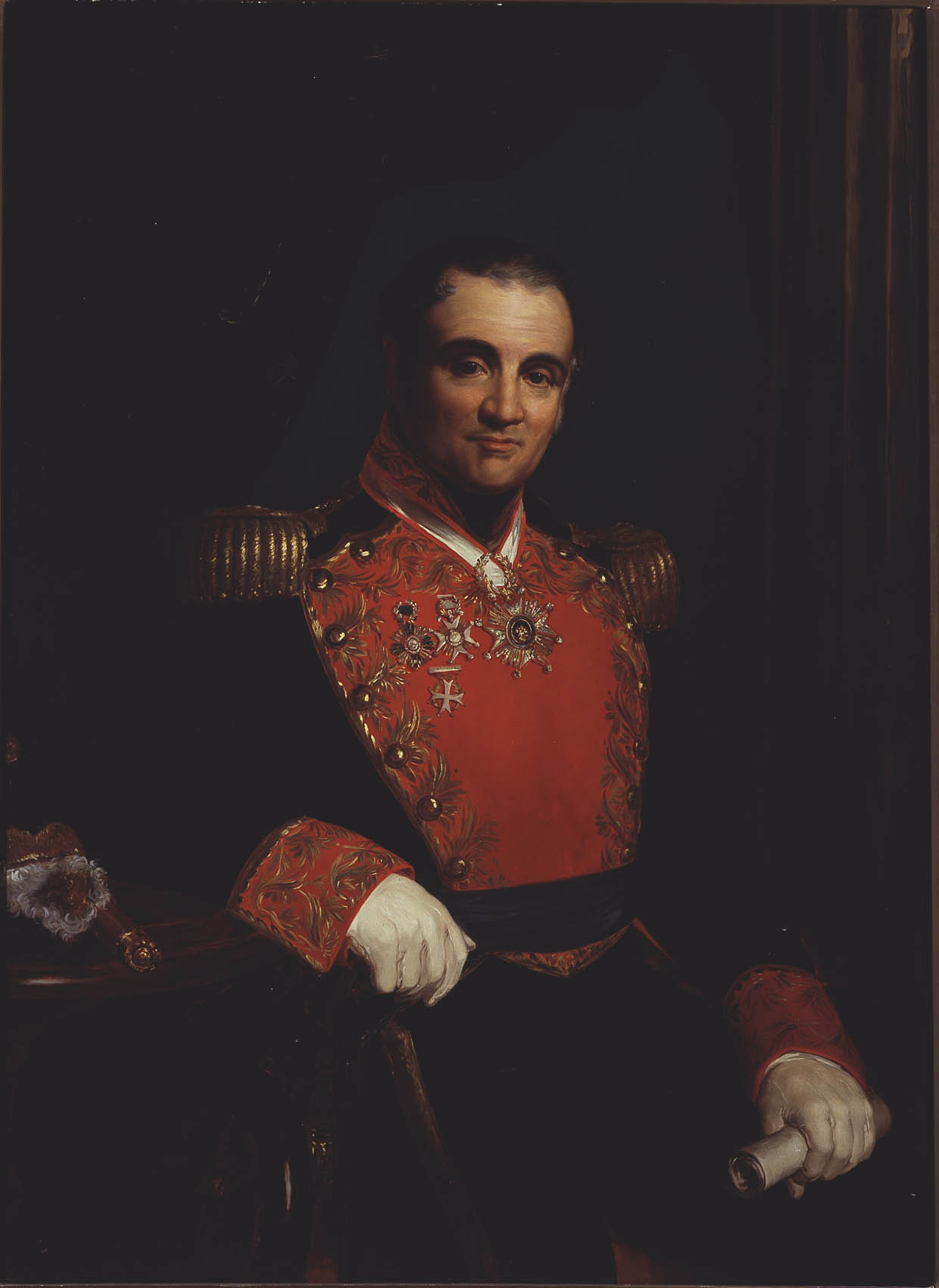
The third man to serve as vice president of Mexico, Valentín Gómez Farías, was the vice president to Santa Anna in 1833. Brave, charismatic, and mercurial, Santa Anna did not much care for governing. So he would step away from the presidency and allow the vice president to govern. Over the next year the two would switch off governing. Most of the time Gómez Farías was running the country, but he was a staunch reformer. When his reforms went too far, Santa Anna would return to the Mexico City for a few weeks. Gómez Farías reforms finally led to large-scale resistance and Santa Anna dismissed his vice president in 1835. The office was then eliminated for a time, but briefly reinstated a decade later when both Bravo and Gómez Farías served short terms in office.
Later in the 19th century Mexico traded upheaval for stability under Porfirio Díaz, who held power for over three decades, starting in 1876.3 In 1904, well into his 70s, Díaz appointed Ramón Corral as Vice President. Corral had held several posts during the long reign of Díaz. After decades of engineering elections, in 1910 Díaz allowed the popular Francisco Madero to run against him. When Díaz was declared the winner, uprisings throughout the nation drove him from power. Corral left office with him.
The government of Madero and his VP, the journalist José María Pino Suárez, was overthrown in a military coup in February 1913 and assassinated days later.
Mexico plunged into a Civil War that would rage for over a decade. A new Mexican Constitution was adopted that abolished the vice presidency. This was front-page news in the October 1, 1916, The New York Times, which reported:
General Carranza’s decree says that owing to the fact that most of the internal troubles and causes of discord among the Mexicans arise from ambitions to hold the Vice Presidential post, he believes it advisable to abolish it to avoid further revolutions.
This is a decent answer to our question of why Mexico doesn’t have a vice president. But there’s more to the story. We’ll return to that question.
The Century of No Veeps
By the 1930s the Civil War and ensuing disorder had petered out and Mexico became a stable one-party state under what eventually became the Institutional Revolutionary Party (PRI—is the Spanish acronym.) Presidents were effectively dictators, but limited to a six-year term. There were elections, but the real power transfer occurred via the destape, the “Revelation” of the president’s designated successor.
PRI’s rule at times brought prosperity, at others corruption. Regardless, it guaranteed order, which after Mexico’s difficult first century was welcome. The PRI violently suppressed opponents, although over time the system began to open. Restrictions on opposition parties were loosened and in 2000 the National Action Party (PAN) candidate for president was victorious. Power has shifted between parties since, although there are concerns that recent presidents have been fostering democratic decay.
There are occasional proposals to re-establish the vice presidency, but they are unlikely to go anywhere. Whatever the failings of Mexico’s politics, it is hard to argue that the lack of a vice president has been a factor.
I’m sorry for this very cribbed version of Mexico’s complicated history. In our next installment we’ll consider what the trajectory and ensuring absence of vice presidents means for Mexico and its politics. Then, we’ll look at U.S. vice presidents and their role in U.S.-Mexican relations. So stay tuned!
For starters, Cinco de Mayo, is not Mexican Independence Day (which is celebrated on September 16). Cinco de Mayo celebrates the victory in the 1862 Battle of Puebla by an outnumbered and ill-equipped Mexican force over French invaders. The French invasion of Mexico occurred, in part, because the U.S. was distracted by its own Civil War and unable to enforce the Monroe Doctrine. At the same time, the Mexican victory had important consequences for the American Civil War, because it slowed the French advance and stymied their efforts to support the Confederacy. The connections between our nations is very deep.
Santa Anna was a disaster for Mexico. The nation lost half of its territory to the United States. After the humiliating Treaty of Guadalupe Hidalgo, also known as the Gadsden Purchase, Santa Anna was overthrown in 1855 and went into exile. He was allowed to return to Mexico in 1874 and died two years later. Santa Anna was nearly forgotten by then. His wife would stand in the street and urge people to come speak with him as though he were still a great man. This pathetic end is the stuff of novels.
Limited to one term, Díaz anointed a successor for the 1880 election. He then ran again in 1884 and then again and again and again.